
Device and connectivity
Can every authorised session survive interruption intact?
Acoustics, power, local buffering, transfer resumption, corruption and duplicate preventionYetu is engineering a consent-visible, offline-resilient capture-to-record system for Indian clinical workflows. The architecture keeps encounter identity, source lineage and clinician authorship connected from the first control event to the approved record.
The systems problem
Speech-to-text solves one component. Clinical documentation also has to preserve who initiated capture, which encounter it belongs to, what survived an interruption, where each field came from and who accepted responsibility for the final record.
Select a stage to inspect the handoff, the mechanism and the variable that needs to hold.
Architecture
Yetu treats documentation as a distributed clinical system. Each layer has a specific job, an explicit failure mode and a variable that can be measured.
Deliberate, visible session control
A physical state machine starts, pauses and closes an authorised recording. Time-stamped chunks enter encrypted local storage before transfer.
Unintended, missed or incomplete capture
Activation fidelity, acoustic completeness, false and missed capture
Consent and encounter identity
The phone-edge layer is intended to bind device, clinician, purpose and encounter before processing begins.
A recording reaches the wrong encounter
Binding accuracy, recovery behaviour, consent comprehension
Offline integrity across interruption
Ordered chunks, integrity hashes and retry-safe synchronisation preserve the session when connectivity drops or the application is interrupted.
Loss, duplication or silent corruption
Recovery rate, duplicate prevention, manifest integrity, latency
Source-linked clinical drafting
Selected-language transcription and clinical structuring are designed to keep each drafted field linked to its source span, model and template version.
Fluent text hides an omission or unsupported statement
Clinical-term accuracy, critical omissions, unsupported content, correction effort
Clinician authorship and controlled release
The clinician reviews uncertain spans, corrects the draft and signs the record before any configured export or institutional write-back.
Automation becomes unaccountable charting
Review completion, edit history, attestation and export audit
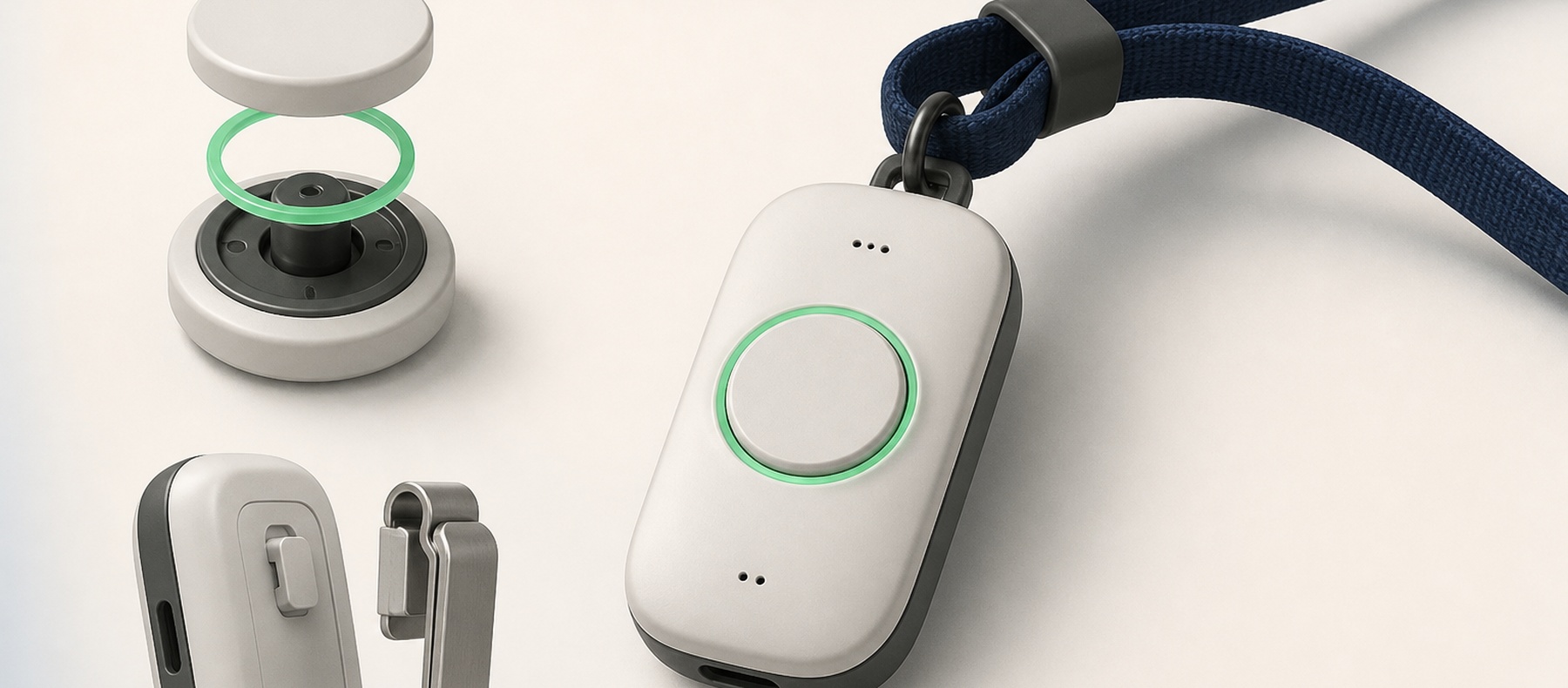
Why a wearable
A wearable is useful only if deliberate physical control, a consistent capture position and local buffering improve real clinical work. Yetu intends to compare the complete system with a phone-only baseline rather than assume the form factor wins.
Comparator variables include missed capture, correction time, acoustic completeness, comfort, charging burden, hygiene and social acceptability.
Engineering validation
Hardware, synchronisation, language models, review workflow and governance have to work together. Product-level claims should follow integrated tests, not component demonstrations.
Can every authorised session survive interruption intact?
Acoustics, power, local buffering, transfer resumption, corruption and duplicate preventionWhat changes across speciality, accent and code switching?
Word error rate, clinical-term accuracy, speaker attribution, omissions and unsupported statementsDoes the complete system reduce work without hiding risk?
Time to approved note, correction burden, interruption count and required-field completenessDo clinician and patient understand the recording state?
Activation recognition, consent comprehension, comfort, hygiene and accidental operationCan access, retention and release be reconstructed later?
Role controls, audit completeness, deletion behaviour, export policy and controlled failureCandidate defensibility
The microphone, language model and template are not the whole product. Defensibility can emerge from how the system controls state, reconciles failure and turns governed corrections into reusable validation assets.
Device identity, clinician, encounter, purpose and recording state move through one explicit control model.
Integrity checks, idempotent retry and duplicate prevention preserve the record chain through unreliable connectivity.
A drafted field can retain its source segment, processing history, version, clinician edit and approval event.
Ethically governed, selected-language and code-switching tests can create a compounding technical asset over time.
Build with Yetu
Early partners can influence the workflow, comparator, safety thresholds and integration model while every important decision can still be tested.
Define the narrow workflow, the fair comparator and which errors could change care.
Shape consent, governance and integration before a pilot reaches routine operations.
Build adjudication protocols and ethically governed Indian clinical-language evaluation assets.
Resolve coupled problems across hardware, resilient edge computing, language, security and deployment.